I Chose the Village: Where Purpose Found Me
A Reflection on Work, Purpose, and the Power of Community in Rural Rwanda
On May 16, 2025, an email arrived in my inbox, and in the inboxes of many fellow graduates from the African Institute for Mathematical Sciences (AIMS) Rwanda. It invited us to apply for a Work-Integrated Learning placement with Move Up Global, a nonprofit organization serving communities in one of Rwanda’s most beautiful yet remote regions, near the foothills of Volcanoes National Park.
When the placement options became clear, many of my colleagues chose Kigali or other larger towns, places where the internet was faster, the roads were smoother, and the mornings were warmer. I understood their decisions. After years of intense study, the city can feel like the reward you have earned.
But something in me was pulling in another direction. I chose the village.
And that choice changed not only where I worked, but also how I understood purpose, leadership, service, and the person I wanted to become.
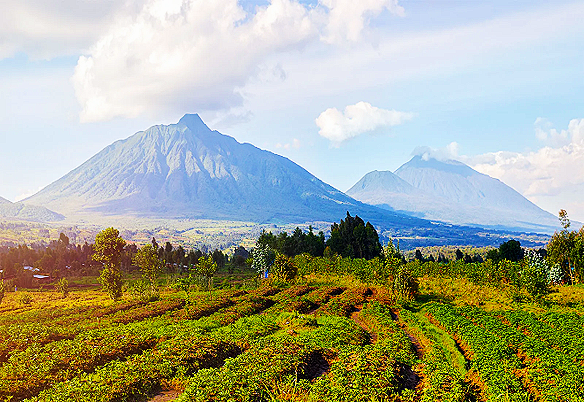
The breathtaking landscape of Musanze District, Northern Rwanda, where the mountains meet the mission.
The Decision No One Expected
I submitted my application on the same day the email arrived. On June 20, 2025, at exactly 3:00 p.m., I joined the interview. Then, on July 1, I received a message from Dr. Anatole Manzi, founder of Move Up Global, confirming that I had been selected as a Monitoring, Evaluation, and Research Specialist.
Perhaps sensing that the rural location might concern me, Dr. Manzi explained that the organization also had a guesthouse in Kigali and that I would be welcome to work from the city whenever I wished.
I appreciated the kindness behind that offer. But my decision was already made.
If I was going to serve this community, I wanted to be present, not observing from a distance, but living and working alongside the people. I wanted to understand the roads they walked, the challenges they faced, the schools their children attended, and the hopes they carried.
On August 4, 2025, I packed my bags and traveled from Kigali to Gataraga Sector, Rungu Cell, in Musanze District, home to Ireme Education for Social Impact (IESI), Move Up Global’s local implementing partner in Rwanda.
I was born in a rural community. I grew up there and attended primary school there. I know what it feels like to come from a place that the world sometimes overlooks.
That is exactly why I chose to return.
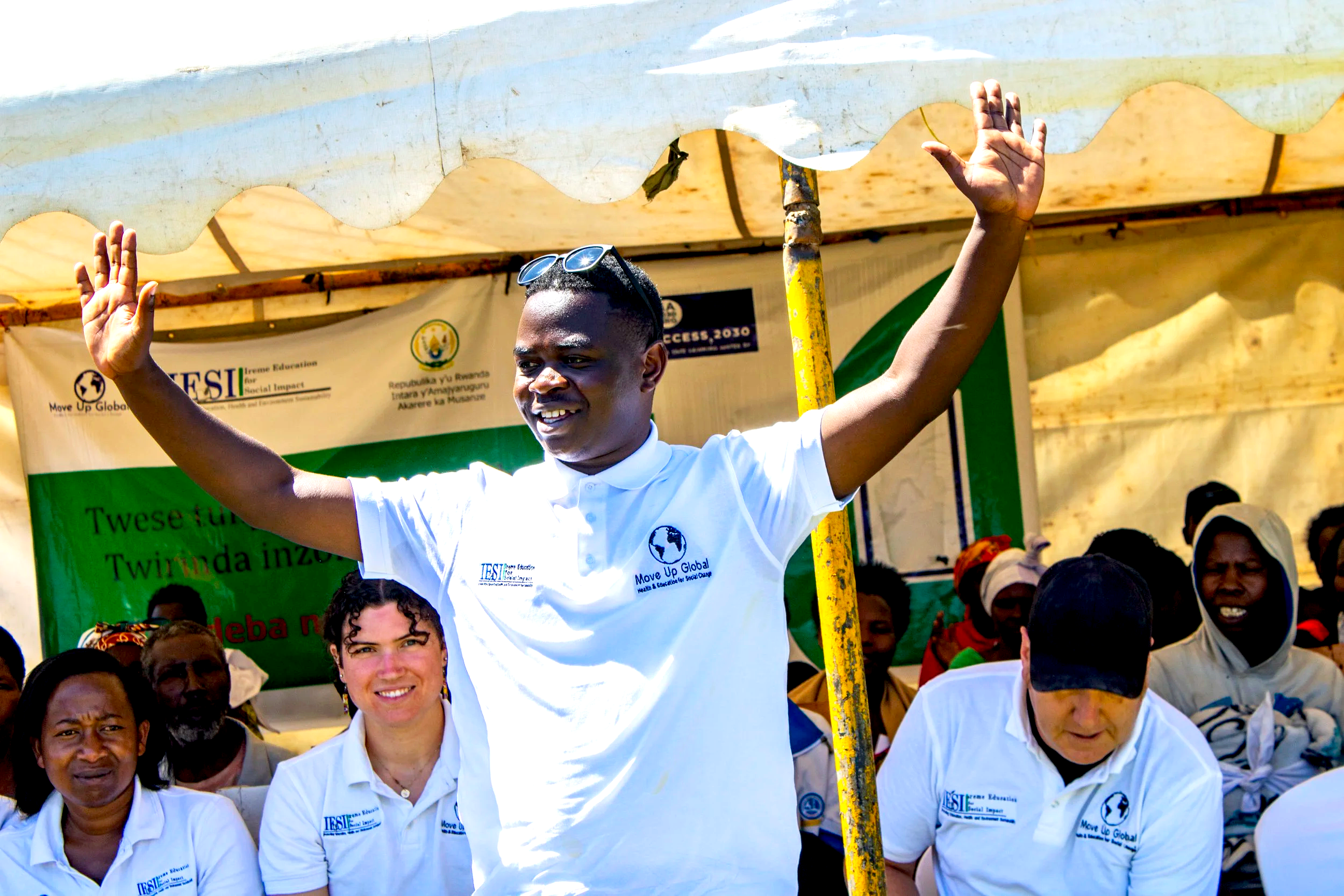
Josue Twahirwa, greeting community members and school leadership, alongside the IESI team, Rob Miller of Mighty Water, and Cora Cunningham of Harvard University, during the distribution of water filters to schools and local communities.
Photo by Titien Sendarasi/ IESI
Becoming Part of Something Real
When I arrived at the IESI office, Executive Director Olive Nyiraneza and the entire team welcomed me warmly. During my first two weeks, I did not rush to prove what I could do. I listened.
I learned about the organization’s mission, its programs, its relationship with the community, and the values that guided its work. I asked questions and observed how the team approached problems.
That beginning taught me one of my most important professional lessons: meaningful and lasting work begins with understanding. Before we introduce solutions, we must listen deeply enough to understand the people, systems, and realities we hope to serve.
My responsibilities soon expanded across the organization. I curated and cleaned datasets, developed monitoring and evaluation tools, designed interactive dashboards, supported research studies, and provided training and mentorship to staff and fellows. I contributed to programs in health, education, nutrition, water, sanitation and hygiene, sexual and reproductive health, and social entrepreneurship.
Yet the work was never simply about spreadsheets, surveys, or dashboards. Behind every number was a child sitting in a classroom, a teacher trying to improve learning, a community health worker following up with a family, or a parent working to create a healthier future for their children.
Once I understood that, data could never again feel abstract.
Walking With the Community
Some of the most meaningful moments of my placement happened far from my desk. I walked along steep mountain paths with my colleagues during household visits, climbing hills that visitors travel across the world to see. I sat in community meetings and listened as local leaders and families described their priorities in their own words. I supported our team working with families to establish kitchen gardens, and joined community members during Umuganda, Rwanda’s monthly national community work.
These experiences taught me that community development cannot be done from conference rooms alone. You must walk the paths. You must enter people’s homes with humility. You must listen without assuming that your education has already given you all the answers.
Over time, I became a familiar face in the village. Children would see me walking along the road and call out, “How are you, the guy who works at Ireme?”
Their words always made me smile. But they also meant something deeper. They showed that the community recognized us. People knew who we were, understood why we were there, and trusted us enough to welcome us into their lives. Trust is not created through a project proposal. It is built through presence, consistency, respect, and shared work.
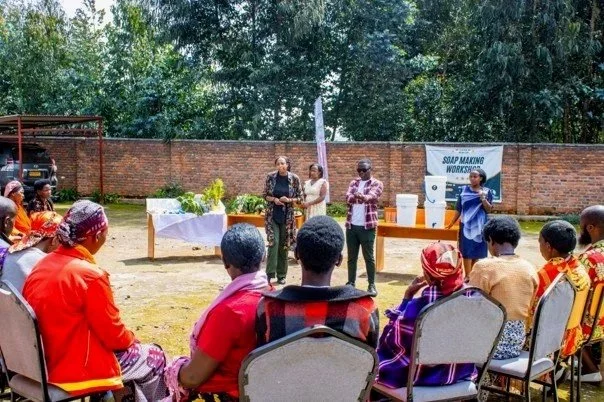
Josue, pictured at the center, engages families in a conversation about nutrition and hygiene, grounding the data in the people, experiences, and relationships behind every number.
Photo by Titien Sendarasi/ IESI
Fostering Global Partnerships and Local Leadership
One of the most significant initiatives I supported was the distribution and evaluation of household water filters in partnership with Mighty Water, a United States-based nonprofit organization that designs and supplies water-filtration systems.
Our team drilled 600 buckets, distributed 195 hollow-fiber membrane water filters to households, conducted family surveys, and tested water for E. coli contamination. Each filter represented more than a piece of equipment. It represented safer drinking water, greater dignity, and the possibility that fewer children would become sick from preventable waterborne diseases.
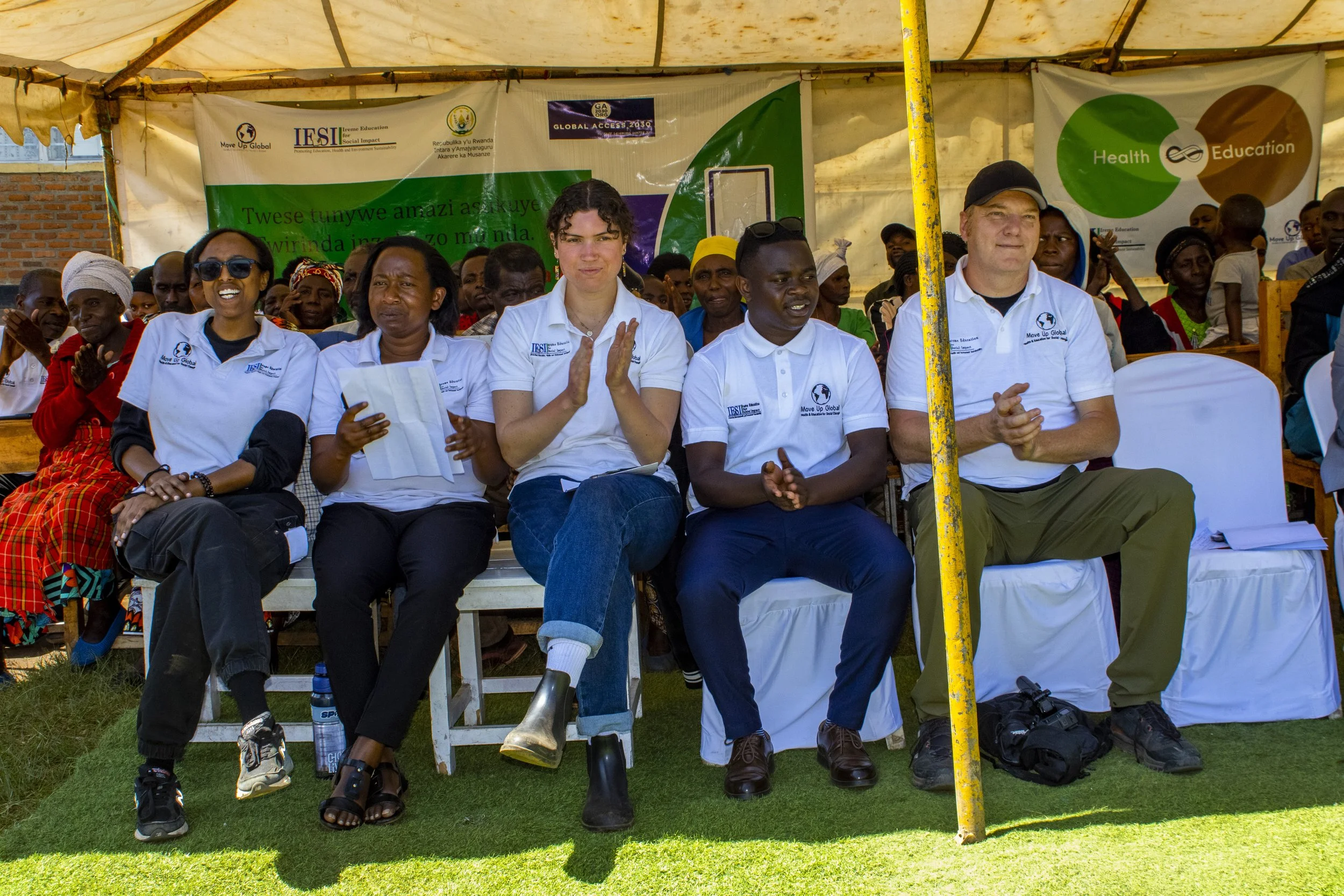
Josue, second from the right, joined Rob Miller, CEO of Mighty Water, first from the right; Cora Cunningham of the Harvard T.H. Chan School of Public Health, third from the right; and Nicole Ujeneza and Dr. Nina Emrakabe, representatives of Move Up Global Ireme, at the official launch of the water-filter distribution initiative for communities and public schools in Musanze District.
Photo by Titien Sendarasi/ IESI
During this project, I worked closely with Cora Cunningham, a Master of Science candidate at the Harvard T.H. Chan School of Public Health and a Rose Service Learning Fellow. Together, we supported data collection and cleaning, descriptive statistical analysis, and focus group discussions for a study examining the feasibility, acceptability, and family-reported outcomes of household water filters.
Cora later published a reflection about her time with IESI. She described the organization as a team that functions like a family and emphasized how deeply connected it is to the community.
Her words captured what I had also come to understand: the strength of IESI does not come only from its technical programs. It comes from relationships. It comes from knowing the community, being accountable to it, and building solutions with people rather than for them.
Through the placement, I also met Professors Donald Shepard and Maria Madison of Brandeis University, and Rob Miller, CEO of Mighty Water. These relationships showed me that respected global institutions do not come to rural communities only to teach or provide assistance.
They also come to listen and learn. The knowledge held in communities like Musanze is valuable. The innovations developed here matter. Rural communities are not merely sites of need; they are sources of leadership, resilience, and solutions that can inform the world.
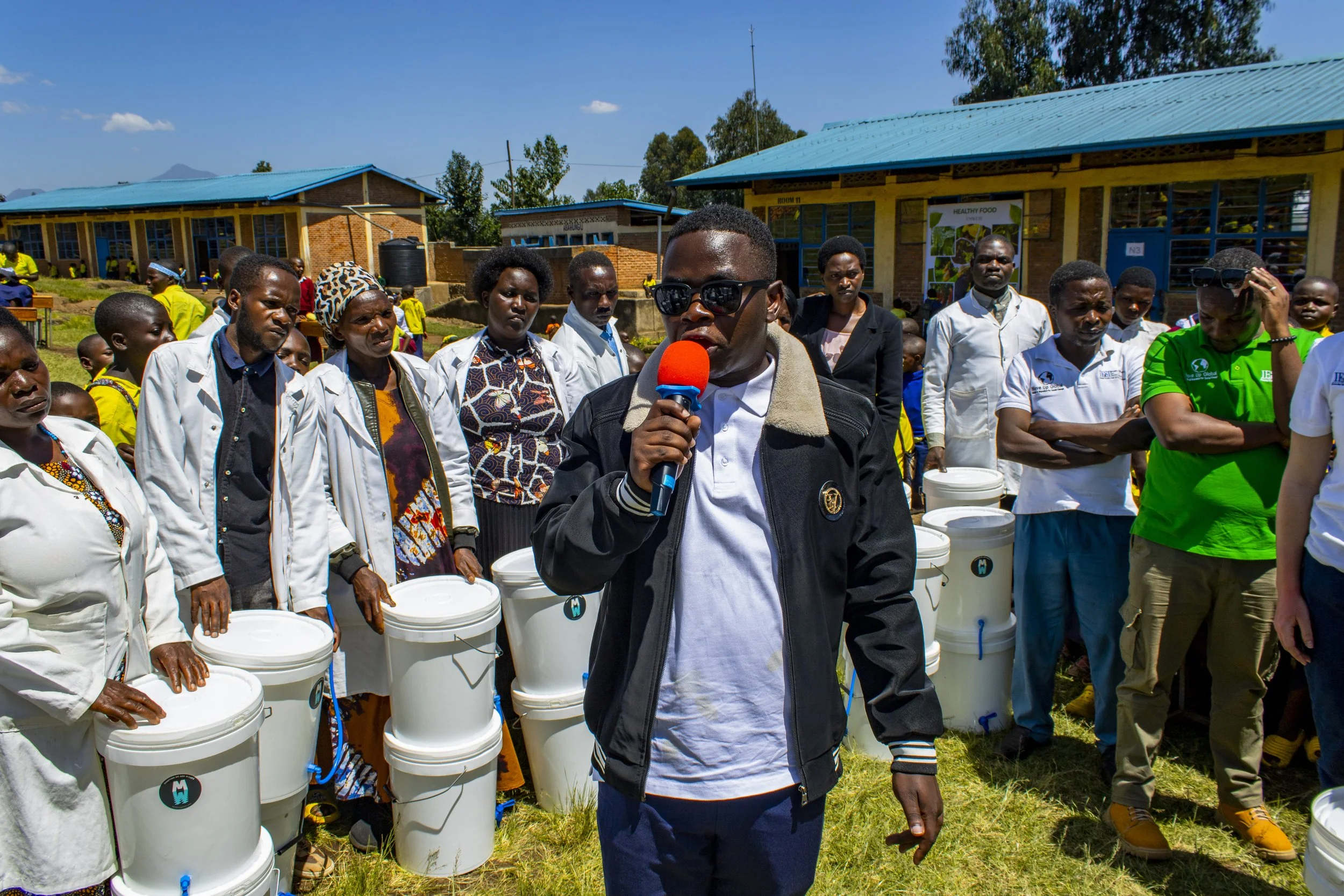
Josue and Ireme team presenting water filters to the leadership and teachers of G.S. Gatovu Secondary School.
Photo by Titien Sendarasi/ IESI
Learning Goes in Every Direction
I arrived at IESI with technical experience in data analysis, research design, R, KoboToolbox, and Power BI. I was eager to contribute those skills. But I quickly learned that knowledge does not move in only one direction.
One of my colleagues introduced me to a data-collection platform I had never used. He patiently guided me through the system and gave me the space to practice. Today, I use the platform confidently and train others to use it.
That experience reminded me that expertise is not defined by job titles, academic degrees, or the institution printed on a certificate. Every team member carries knowledge that can strengthen others. The most effective organizations create environments where people teach one another freely and where asking for help is seen as a strength rather than a weakness.
I also participated in virtual workshops on digital technology and artificial intelligence organized by Move Up Global’s partners. In a region that can easily be left behind by rapid technological change, these discussions felt both urgent and hopeful.
I began to imagine a different future: one in which rural communities do not wait passively for innovation to reach them, but actively shape, adopt, and lead it.
Geography should never determine who gets to participate in the future.
When Data Becomes a Form of Listening
Working with data in a rural community transformed how I understood my profession.
Before the placement, I thought of data primarily as something to collect accurately, analyze carefully, and present clearly. In Musanze, I learned that data is also a way of listening.
When I reviewed neglected tropical disease screening results collected by community health workers, I was not simply examining totals and percentages. I was identifying children at risk and communities requiring urgent attention.
When I analyzed household nutrition and food-security data, each observation represented a family making difficult decisions about what to grow, what to eat, and how to provide for its children.
When I developed Power BI dashboards, I saw that the way information is presented can determine whether action follows. A clear visualization placed before a program leader, government partner, or donor can redirect resources, identify a neglected community, improve implementation, or demonstrate that an intervention is working.
Data analysis in community development is not a back-office function. It is central to accountability and impact. Others may see charts, percentages, and tables.
I have learned to see children, families, decisions, and possibilities.
The Mission Behind the Work
Move Up Global is a Boston-based nonprofit organization committed to improving health and education in rural and resource-constrained communities. In Rwanda, it works through its local implementing partner, Ireme Education for Social Impact, based in Musanze District.
Together, the organizations use the Ipfundo or Knot framework to strengthen the connections among schools, families, and local health systems. The model recognizes that a child’s health, education, nutrition, living conditions, and future are inseparable. The programs I supported reflected the breadth of that mission.
The Mt. Muhabura Scholarship Project helps students from disadvantaged backgrounds enroll in school and continue their education. The neglected tropical disease program equips community health workers to screen community members and generate information that supports treatment and follow-up. The household water-filter initiative improves access to safe water while building evidence about health, education, and family outcomes.
Through the Umwete Garden Project, families receive support to establish kitchen gardens, improve household nutrition, and strengthen food security. IESI also continues to develop digital data systems, student-tracking platforms, mobile data-collection tools, and interactive dashboards to ensure that programs are guided by evidence and that outcomes are measured responsibly.
This is an organization that is growing, but not for the sake of growth alone. It is growing with purpose.
The Schools, Teachers, and Students Who Inspired Me
I had the opportunity to engage with students across all three schools, covering approximately 5000 children. I answered their questions, listened to their ambitions, and encouraged them to believe in what they could become. I also worked with teachers, combining their deep understanding of classrooms and students with my experience in data and research.
Every conversation with a student reminded me of my younger self.
When you grow up in a rural community, it can sometimes feel as though opportunity belongs somewhere else, to children in cities, to students attending better-resourced schools, or to people whose lives appear closer to the centers of power.
I want every rural child to understand this: Your location does not determine the size of your future. Your village is not evidence that you have been forgotten. It can be the place where your strength, imagination, and leadership begin.
A Message to Young Graduates
To every young graduate considering a placement in a rural community, I want to speak directly to you. The city will still be there. But the opportunity to help build something meaningful, to become known by name in a community, and to work on challenges that affect real families is rare.
The opportunity to collaborate with community members and internationally recognized researchers in the same week is rare. The opportunity to discover what your education is truly for is rare. Do not allow comfort to make all your decisions.
You were trained to confront difficult problems. Many of those problems are not found in modern offices with reliable internet and polished meeting rooms. They exist in places where roads become difficult after the rain, where the morning air carries cold mountain fog, and where communities continue to innovate despite limited resources.
Those communities need your skills. But they need more than the qualifications listed on your résumé. They need your presence, humility, courage, and willingness to learn.
I was born in a rural community, and I chose to return to one. Everything I am becoming as a professional has been shaped and sharpened by what I found there: a team that became family, a community that placed its trust in me, and a mission that made every cold morning worth waking up for.
Looking Ahead
This placement never felt like an ending. It felt like the beginning of the work I was meant to do. At the conclusion of my Work-Integrated Learning fellowship, Move Up Global Ireme converted my placement into a formal employment contract. I received that opportunity with deep gratitude and humility. It affirmed the value of community-embedded learning and strengthened my commitment to this organization and the people it serves.
In the years ahead, I hope to expand and strengthen the organizational data systems, improve dashboards and data-collection tools, and make evidence more accessible to program teams, communities, and partners.
I also hope to contribute to peer-reviewed publications arising from our research, including the household water-filter study, so that lessons developed in Musanze can inform work in other communities across Rwanda and beyond. I look forward to presenting our work at national and international conferences and carrying the experiences and voices of rural communities into spaces where policies, investments, and development priorities are shaped.
Beyond Move Up Global Ireme, I hope to help other organizations build stronger data cultures, cultures in which information is not collected simply to satisfy reporting requirements, but used to learn, improve, and remain accountable to the people programs are intended to serve.
The village gave me far more than a placement. It gave me direction.
A Word of Gratitude
None of this would have been possible without the African Institute for Mathematical Sciences Rwanda and its Work-Integrated Learning Fellowship program.
I am deeply grateful to Dr. Charles Lebon Mberi Kimpolo, Director of the AIMS Industry Initiative and the Next Einstein Forum, for championing a model that creates a bridge between academic preparation and real-world impact.
The fellowship did not simply place me in an organization. It helped me understand where I belong as a professional. It gave me the confidence to move from being a student of mathematics and data science to becoming a practitioner who uses those tools in service of communities.
I am equally grateful to Dr. Anatole Manzi and the entire Move Up Global family for welcoming me, trusting me, challenging me, and giving me room to contribute and grow.
And to every community member in Musanze who opened a door, responded to a survey, joined a meeting, planted a garden, celebrated clean water, or reminded me why this work matters: thank you.
The village did not hold me back. It called me back. Because meaningful change is not imposed from the top down. It is nurtured through relationships, strengthened by evidence, and built from the roots up.
About the Author
Josue Twahirwa is a Research Specialist and Data Systems Officer at Move Up Global Ireme. He completed his studies at the African Institute for Mathematical Sciences Rwanda and joined IESI through the Work-Integrated Learning Fellowship program in August 2025. He is passionate about data-driven community development, mathematics education, and the use of technology to strengthen rural livelihoods. He also serves as a Mathematics Olympiad coach with the Rwanda Olympiad Foundation.